Entain Warns UK Tax Hikes Could Shrink Regulated Gambling Market and Fuel Black Market Growth
Entain Warns UK Tax Hikes Could Shrink Regulated Gambling Market and Fuel Black Market Growth

The Tax Changes at the Heart of the Storm
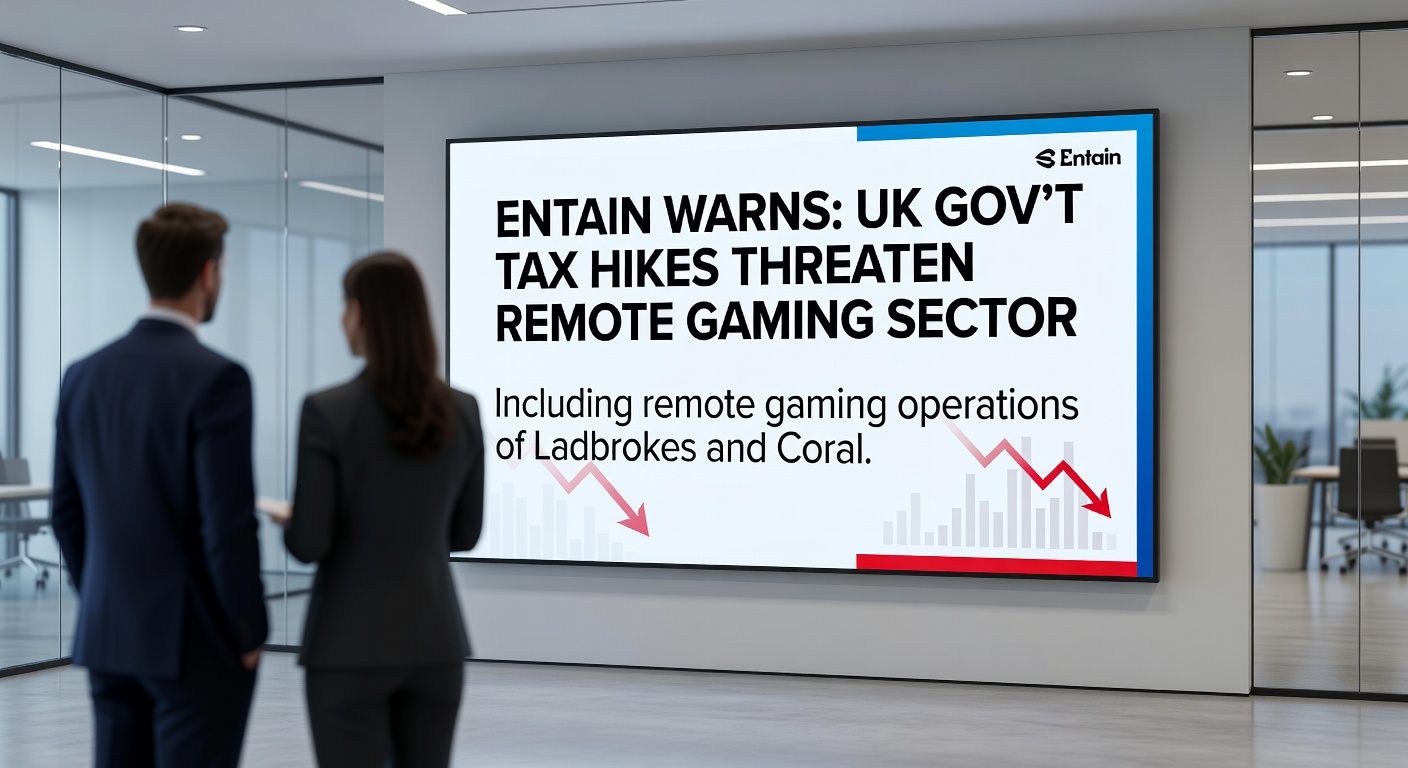
UK government decisions on gambling taxes have sparked sharp reactions from major players like Entain, the firm behind Ladbrokes and Coral, as remote gaming duty jumps from 21% to 40% starting April 2026 while online sports betting duty climbs from 15% to 25% come April 2027; these shifts, announced amid broader fiscal tightening, target online operators directly, and Entain executives now flag them as harbingers of trouble for the entire regulated sector.
Observers note how such hikes build on previous adjustments, yet this round stands out because it doubles the gaming duty burden in one go, prompting companies to recalibrate strategies overnight; take Entain's recent financial disclosures, where the firm explicitly ties a hefty £488 million impairment charge to these impending costs, a move that ballooned after-tax losses to £680.5 million for 2025.
What's interesting here is the timing— with March 2026 just around the corner from current discussions, operators face a crunch where preparations intensify, and smaller outfits scramble to assess survival odds before the April implementation hits.
Entain's Financial Hit and Strategic Response
Entain didn't mince words in its latest reports, booking that £488 million impairment after reassessing asset values in light of the tax trajectory; the charge reflects writedowns on goodwill and other intangibles, particularly from acquisitions like Ladbrokes Coral, now squeezed by profit forecasts dimmed by over 50% from 2027 onward due to the dual duty increases.
And while losses hit £680.5 million after tax for the year, revenue streams held somewhat steady at £5.1 billion, a testament to core operations in betting shops and online platforms; but here's the thing, management now pivots to cost-slashing, targeting third-party casino content suppliers first, aiming to claw back margins as duties erode gross profits relentlessly.
Figures reveal the math behind the pain: remote gaming duty, applied to online casino gross gaming revenue, will devour nearly half of that pot post-2026, whereas sports betting duty—now at 25% by 2027—bites into margins already thinned by competition; Entain's approach, paring back non-essential spends, mirrors tactics seen in past tax squeezes, although experts observe this one's scale tests even giants like them.
- Remote gaming duty: 21% now, 40% from April 2026
- Online sports betting duty: 15% currently, 25% from April 2027
- Entain's impairment: £488 million, linked directly to tax outlook
- 2025 after-tax losses: £680.5 million
- Projected profit drop: Over 50% by 2027
Such moves buy time, yet those who've tracked the industry know cost-cutting alone rarely offsets structural tax walls this steep.
Warnings of a Shrinking Regulated Market
Entain leaders paint a stark picture, arguing these tax leaps will shrink the regulated market by pushing smaller operators to the brink or outright closure; with barriers rising, consolidation favors behemoths like themselves, but even they brace for leaner times, as the exodus creates gaps filled not by competitors but by unregulated alternatives.
Turns out, the firm highlights how offshore sites and illegal bookies stand ready to capture fleeing punters, a shift that undercuts UK tax revenues long-term while exposing players to risks like unmatched protections; data from past duty hikes, such as the 2014 point-of-consumption shift, showed black market upticks, and Entain now echoes that, warning history repeats unless policymakers rethink.
One case observers point to involves Ireland's 2023 duty increase to 40% for gaming, where licensed operators reported customer migration to untaxed platforms abroad; similarly, Entain predicts UK punters—loyal to Ladbrokes shops today—might drift online to evade the squeeze, eroding the very regulated ecosystem taxes aim to fund.
But here's where it gets interesting: as March 2026 nears, with budgets still unfolding, calls grow for the HM Treasury to model these impacts fully, incorporating not just revenue gains but market contraction effects spelled out by firms like Entain.
Broader Industry Ripples and Operator Strategies
Smaller operators, already navigating tight margins, face the stiffest test; Entain's scale—over 4,000 UK betting shops under Ladbrokes and Coral—offers buffers like diversified retail arms less hit by online duties, yet even they impair assets proactively, signaling widespread jitters.
Cost discipline ramps up across the board, with Entain axing third-party casino deals that no longer pencil out under 40% duties; suppliers feel the pinch too, as platforms prioritize in-house content or lower-cost alternatives, reshaping the content ecosystem overnight.
People who've studied these cycles note how tax shocks spur innovation, like tech upgrades for efficiency or pushes into less-taxed verticals, although Entain's playbook leans conservative: trim, reassess, endure; and while the UK Gambling Commission monitors compliance, it stops short of tax policy, leaving firms to lobby amid the flux.
Yet now, with 2026 duties looming large, boardrooms buzz with scenarios where regulated take-up drops 20-30%, per Entain's internal math, handing illicit operators a windfall they exploit through lax ads and unchecked odds.
Looking Ahead: Market Dynamics in Flux
Entain's impairment and loss figures underscore the immediate sting, but projections steal the show, with 2027 profits halved unless duties bend; smaller players, lacking deep pockets, shutter or offshore, narrowing choice for bettors who value UKGC safeguards like self-exclusion tools and fair play audits.
So as April deadlines approach—first gaming in 2026, then sports in 2027—industry voices amplify Entain's caution, urging balance between revenue needs and market health; take one analyst who crunched numbers post-announcement, finding potential £1 billion+ revenue bleed if migration accelerates, a figure that aligns with the firm's warnings.
It's noteworthy that despite the gloom, Entain eyes growth abroad, where duties stay milder, although UK roots run deep for Ladbrokes Coral, binding them to the fight here; observers watch closely, knowing the rubber meets the road when those first duty bills land.
Conclusion
Entain's stark alert on UK tax hikes—from 21% to 40% remote gaming duty in April 2026 and 15% to 25% online sports betting in 2027—crystallizes tensions in a sector vital to economy and employment; the £488 million impairment and £680.5 million 2025 losses highlight fiscal realities, while cost cuts on casino content signal adaptation amid over 50% profit threats by 2027.
Warnings of a shrunken regulated market, smaller operator wipeouts, and illegal gambling surges carry weight, backed by historical parallels and current math; as March 2026 edges closer, stakeholders eye Treasury moves, hoping models capture the full ripple before black market shadows lengthen further.
In the end, the ball's in policymakers' court, with Entain's story a clear marker of stakes involved for all.