Dealer Cadence in Live Tables Creates Stacked Promotion Routes to Networked Reward Pools

Live dealer sessions operate on measured timing cycles that operators adjust to match player engagement patterns and these cycles directly influence how promotions stack across multiple bonus tiers toward shared prize systems according to industry data from 2025. Game rounds proceed at controlled intervals which allow platforms to insert layered offers such as deposit matches followed by cashback triggers and then milestone rewards that feed into networked jackpot structures where contributions accumulate across player pools. Data from regulatory filings in several jurisdictions shows that pacing adjustments in May 2026 correlated with increased participation in multi-step promo sequences because shorter intervals between hands kept users active longer while longer pauses allowed time for bonus notifications to appear without disrupting flow.
Mechanics Behind Paced Live Dealer Interactions
Operators measure round duration in seconds per hand and then calibrate these durations to align with specific promo activations where an initial no-deposit incentive unlocks after three consecutive rounds at a set pace and subsequent layers activate once players reach volume thresholds measured in total bets placed. This structure creates pathways where early participation feeds data into accumulative networks that distribute portions of pooled funds to qualifying accounts. Research from academic studies on digital gambling interfaces indicates that consistent pacing reduces drop-off rates because players remain in rhythm with both the dealer actions and the overlaid promotional prompts.
Layer Integration With Accumulative Systems
Promo pathways function through sequential unlocks where the first layer might involve a timed deposit bonus triggered within the first five minutes of paced play while the second layer activates after a set number of qualifying hands and routes a percentage into a progressive pool that grows from contributions across multiple tables and sites. Observers note that these networks rely on real-time tracking software which logs every paced round and assigns reward credits accordingly. Figures from European gambling associations reveal that such layered systems accounted for measurable growth in player retention metrics during early 2026 periods when live dealer traffic increased.
But here's the thing, the connection between pacing speed and promo depth becomes clearer when examining how slower rounds allow more complex bonus calculations to process without lag whereas faster cycles suit simpler entry-level offers that funnel users toward teh accumulative stages. Platforms adjust these speeds based on traffic analytics so that peak hours feature tighter pacing to maximize hands per hour and thereby accelerate progression through the layers.
Regional Patterns in Live Dealer Promo Deployment
Markets in North America and parts of Asia have adopted similar pacing strategies though regulatory frameworks differ with some jurisdictions requiring transparent disclosure of how round timing affects bonus eligibility. A report from the iGaming Ontario highlighted that live dealer titles using variable pacing saw higher engagement with accumulative prize features compared to static speed formats. In Australia, data compiled by state-level research bodies shows parallel trends where operators link dealer cadence directly to multi-tier reward programs that build shared prize pools.
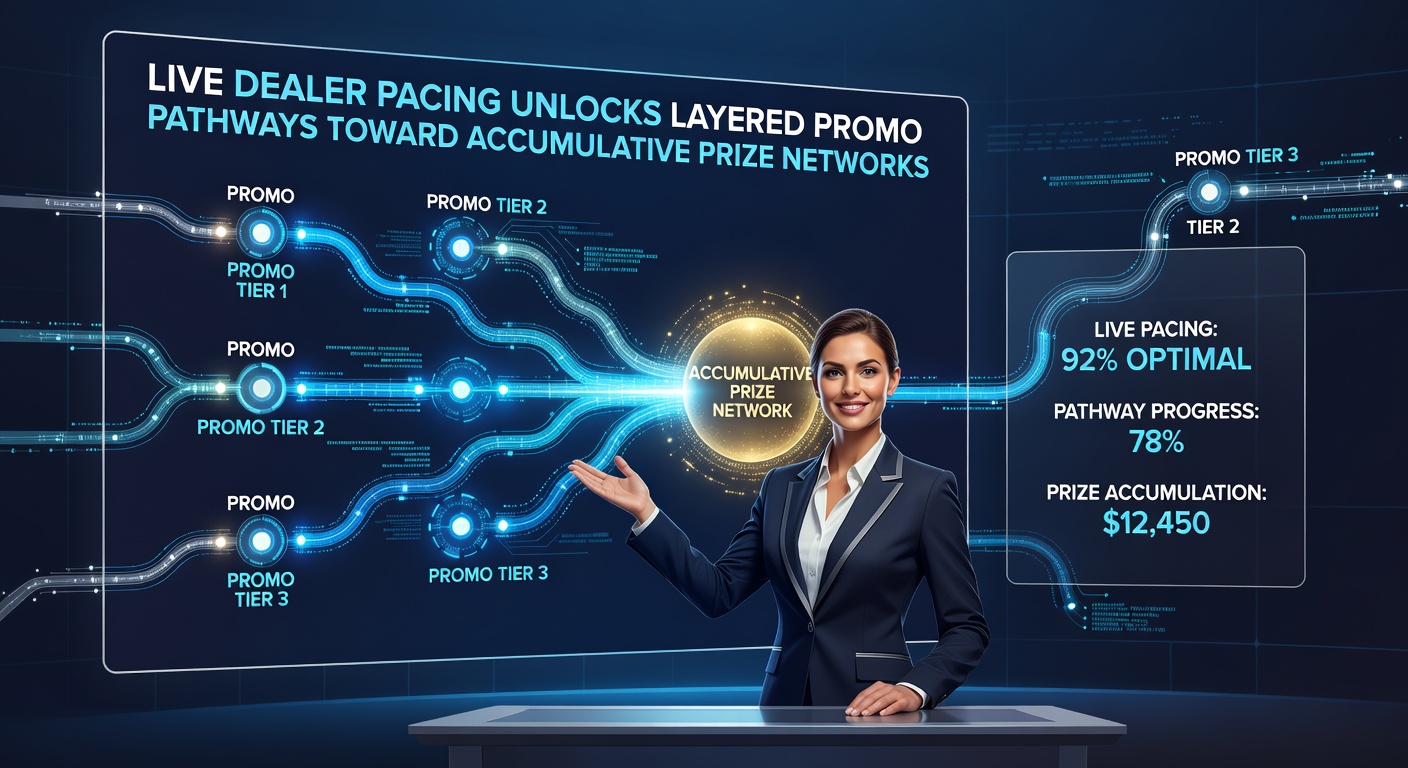
Those who've analyzed transaction logs across platforms find that players who complete early promo layers at moderate pacing speeds show greater likelihood of advancing into the networked stages where prize accumulation becomes visible through on-screen counters. This progression relies on backend algorithms that synchronize dealer actions with promo triggers so that each completed round advances both gameplay and reward tracking simultaneously.
Technical Factors Supporting These Pathways
Software providers integrate timing controls into dealer management systems which permit operators to shift between standard and accelerated modes while maintaining compliance with fairness standards. Evidence from technical audits conducted by independent testing labs confirms that such controls preserve random outcomes even as pacing changes occur. Players encounter these adjustments through seamless transitions where the dealer continues without interruption yet the frequency of promotional prompts increases or decreases accordingly.
What's interesting emerges when comparing data sets from different regions where markets with stricter advertising rules still permit pacing-based promos because the mechanism ties directly to gameplay rather than external marketing. Industry organizations such as the European Gaming Association have documented how these systems maintain separation between game mechanics and bonus delivery while still achieving layered progression toward accumulative rewards.
Future Developments Expected Through Mid-2026
Projections shared in sector briefings point toward further refinement of pacing algorithms that incorporate player-specific data to personalize layer activation timing and thereby route more users into prize networks at rates observed in recent quarters. Regulatory updates scheduled for later in 2026 in select markets may require additional reporting on how round durations influence bonus distribution yet the core structure of layered pathways remains intact based on current operational models.
Conclusion
Live dealer pacing serves as the operational backbone that enables stacked promotional sequences to connect with accumulative prize networks through measured round intervals and sequential triggers. Data from multiple regulatory and research sources shows consistent patterns where adjusted timing supports higher completion rates across promo layers. Observers continue to track these developments as platforms refine their approaches into the latter half of 2026 and beyond.